
Fur Real: Human Factors in Animal Drugs
Why Human Factors Engineering Is a Natural Fit for Veterinary Medicine
by Katie Curtis
When people hear “human factors engineering,” they usually think of medical devices, hospitals, and clinicians—not dogs, cats, or barns.
But at Design Science, we see it differently.
In animal drug administration, humans are still very much in the loop. They prepare doses, restrain animals, administer treatments, clean up afterward, and live alongside pets undergoing treatment. That’s why FDA’s Center for Veterinary Medicine (CVM) expects sponsors to address Human User Safety (HUS) as part of animal drug approval—and why human factors (HF) is such a powerful (albeit underused) tool in the veterinary space.
The Human in Animal Health
FDA’s HUS framework focuses on protecting people who interact with animal drugs, including veterinarians, technicians, agricultural workers, animal owners, and even household members.
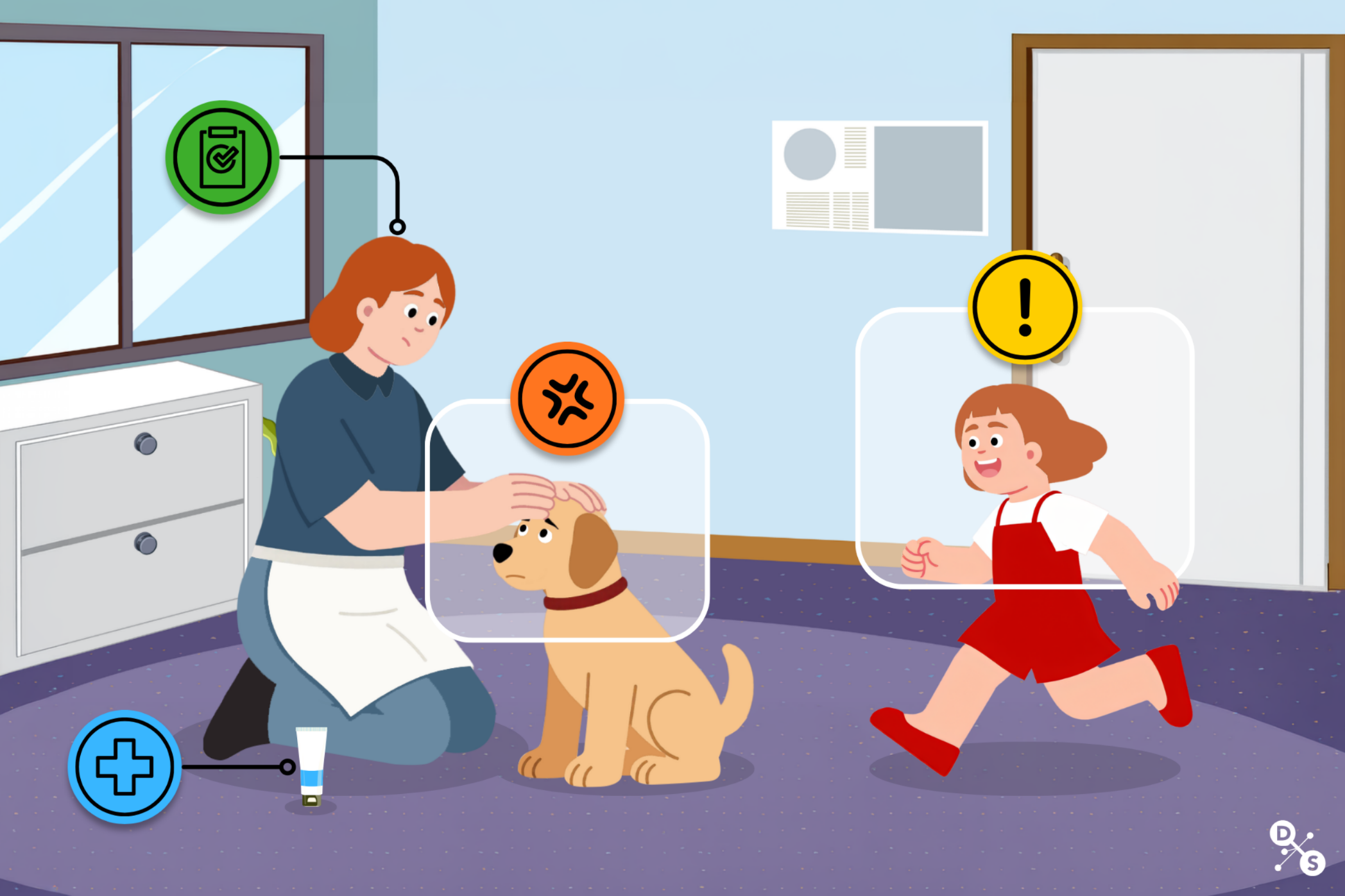
Imagine you’re applying a topical medication to your dog, Fido. He squirms, the cream transfers to your fingers, and you move on with your day. Later, your child inadvertently pets the treated area. These everyday interactions represent normal product use. This is exactly how human exposure to animal drugs happens in the real world.
These are classic use-related risk scenarios—the very situations human factors engineering was designed to understand and mitigate.
Human User Safety Is a Human Factors Problem
CVM evaluates HUS using three core elements:
Hazard: What could cause harm?
Exposure: How, when, and how often might a person be exposed?
Risk characterization: How likely is harm, and how severe could it be?
For human factors practitioners, this framework will immediately feel familiar. It closely mirrors the use-related risk analysis process applied to medical products for use in human patients.
In both cases, the goal is the same: anticipate how real people interact with a product in real-world conditions, and design to reduce foreseeable risk before it reaches the user.
Veterinary Medicine Use Conditions
A core principle of human factors engineering is understanding a product’s intended users, uses, and use environments. Veterinary medicine introduces a particularly complex—and fascinating—set of use conditions.
Animal behavior can be unpredictable during medication administration. Use environments may include homes, clinics, farms, and feed mills. For companion animals, household members—including children or pregnant individuals—may experience secondary exposure through handling treated animals or contact with bodily fluids after drug administration.
In veterinary medicine, real-world use context isn’t just relevant—it’s impossible to ignore.
Drugs for Animals, Designed for Humans
Human factors engineering brings real-world use into focus—strengthening HUS risk assessments, uncovering exposure risks, and informing safer packaging and dosing device design. The CVM HUS guidance stops short of requiring human factors studies, but it clearly signals that they may be recommended when human interaction, exposure risk, or use complexity could impact human safety. For sponsors, this creates an opportunity to address use-related risks early—before they become regulatory friction points.
Connect with us to learn more about how our expertise can elevate your veterinary product development to the next level.
Share this entry